Checkride Prep: How to Prepare and Pass the First Time
How should you approach checkride prep?
Checkride prep works best when you follow your instructor's plan, including mock oral and practical exams that reveal weak areas early. Get your own copy of the Airmen Certification Standards (ACS), manage stress, and fly the checkride like a training flight.
Good checkride prep starts with doing what your instructor tells you. As test day nears, they will direct what to study and run mock oral and practical exams so you find weak areas early. Get your own copy of the Airmen Certification Standards (ACS), since it lays out the tasks you must do. Manage your stress, keep practicing, have your books ready, and fly the checkride like any other training flight.
Today I’m going to help you prepare for your FAA checkride.
After dozens of hours in the plane and dozens more on the ground cramming with your instructor, checkride day seems to be approaching faster than ever.
Remember the friendly and immortal words of Douglas Adams: Don’t Panic!
Nobody likes tests. But as tests go, the FAA practical pilot exam—more commonly called the checkride—is pretty darn easy. By the time you get there, your instructor has likely already prepped you for everything that could come up.
You’ve done all the maneuvers enough times that your instructor is confident you will pass with flying colors. So most of the challenge lies in overcoming your anxieties and that mental “test block” that happens to the best of us occasionally.
Looking for some quick checkride prep? Take a look at Pilot Institute’s checkride prep course that will help you feel confident and prepared going into your checkride.
What to Expect When You’re Expecting…a Checkride
First off, what is the FAA checkride like?
If you are still in the middle of your private pilot training, you probably have a lot of questions. But as you get closer to being ready, your instructor will progressively make every flight you take look more like the checkride.
The result is that by the time you take it, your checkride will look like every other training flight. The only difference on checkride day is that you’ll be carrying a passenger that you’ve never met before—the examiner.
What Will Happen During Your FAA Checkride
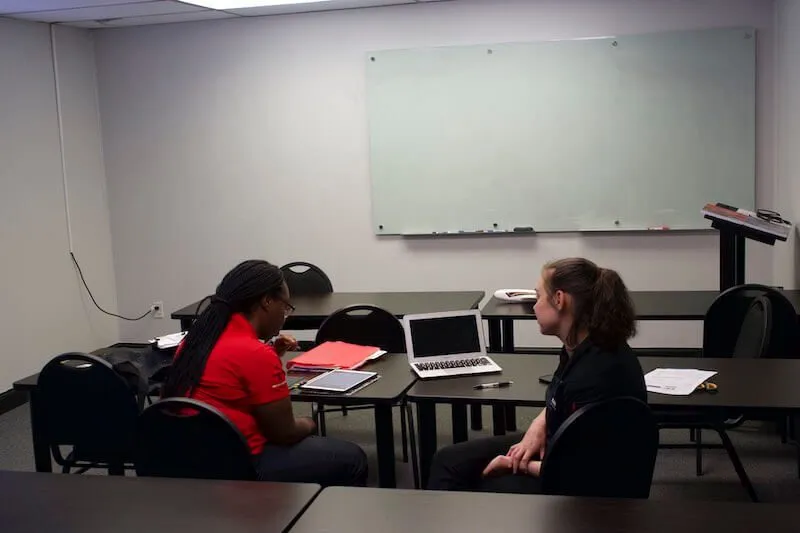
An FAA checkride starts with paperwork, then an oral exam, then a flight. Most private pilot oral exams last 1.5 to 2 hours, and the flight covers your planned cross-country, maneuvers, simulated emergencies and at least three landings.
Checkrides always begin with paperwork. The examiner will want to review your application and all of your logbook records to ensure that you’re eligible for the certificate you’re applying for.
They’ll also want to collect their fee if they’re an independent DPE (designated pilot examiner).
Once you’ve got the paperwork out of the way, it’s time to settle into the oral exam portion of the checkride. Most private pilot oral exams last between one and a half and two hours. You’ll start by planning a quick cross-country and talking about the plane’s performance and limitations.
Nothing you cover during the oral is a surprise—in fact, the FAA provides you with all of the information you need to know exactly what to study.
If the oral goes well, you’ll proceed to the plane for the practical portion of the FAA checkride. You’ll start by flying the cross-country route you planned during the oral, and then you’ll break off and practice some maneuvers.
Upon returning to the airport, you’ll likely do at least three landings. Of course, they’ll be some simulated emergencies along the way—but again, nothing that should come as a surprise.
Who Can Give FAA Checkrides?
FAA checkrides are given by Designated Pilot Examiners (DPEs) or, in some areas, FAA Aviation Safety Inspectors (ASIs). DPEs are experienced independent pilots, not FAA employees, and both follow the same guidance.
Most people take their checkride with a DPE, or FAA Designated Pilot Examiner.
These are experienced pilots who have earned the privilege of offering this service. DPEs come from all walks of pilot life, from retired airline captains to career flight instructors.
DPEs are basically independent flight instructors. They are not actually FAA employees.
It’s also possible in some parts of the country to take your checkride with an FAA Aviation Safety Inspector (ASI). However, not all local FAA offices provide this service due to staffing issues. Technically, it doesn’t matter who you do your checkride with because they both follow the same guidance in giving it.
Is the Private Pilot Checkride Difficult?
Yes, the private pilot checkride is demanding because it covers a large amount of material in one afternoon. Most people need six months to a year of full-time training, but by then it feels like another long training flight.
The FAA checkride is intense in the amount of material it covers.
If you look at it from the examiner’s point of view, they have to get to know you well enough during one afternoon to be convinced that you know enough to be a safe pilot for the rest of your life. It takes most people six months to a year to get that much knowledge and practice in, and that’s if they’re working at it full time.
There’s simply a lot of material to cover.
But from the student’s point of view, it’s something like the frog not realizing that the kettle is going to boil. You’ve gained all of this knowledge and experience gradually over a period of time. And while it’s a lot of stuff to know, by the time you take your checkride you really do know it.
So is the private pilot checkride hard? In some ways, yes—it is a long, stressful training flight. But then, it shouldn’t be any different from other long, stressful training flights at this point in your training.
Checkrides Versus Part 141 Progress Checks
Part 141 progress checks are mini checkrides spread through training, so they show students what an FAA checkride looks like. The final checkride is usually with an outside DPE or the school's chief instructor.
If you’re a student at a Part 141 school and have completed several progress checks during your training, you’ll already have an excellent idea of what an FAA checkride looks like.
These are, after all, mini checkrides dispersed throughout your training. Instead of taking those progress checks with school instructors, you’ll likely take your checkride with an outside DPE or the school’s chief instructor.
How Do You Prepare for Your First Checkride?
The best way to prepare for a first checkride is to follow your instructor's direction on what to study and when. Mock oral and practical exams before test day show which areas need more work.
The simple answer is to do what your instructor tells you to do. Part of pilot training is preparing for your FAA checkride. As you get closer to test day, your instructor will direct you on what to study and when.
To that end, you’ll likely complete several mock oral and practical exams in the lead-up to the big day. So if there are areas that you’re rusty on, you’ll know in advance.
Need more study help?
Getting ready for the practical exam? Be sure to check out our study tips for the FAA knowledge test.
FAA Checkride Study Tips
Now that we’ve covered what’s going to happen during your checkride, here are a few helpful tips to prepare for your FAA checkride.
Know and Use the Airmen Certification Standards (ACS)
The Airmen Certification Standards (ACS) define the outline and format of the checkride, listing the tasks you must do and those you might do. Every applicant should have a personal copy to study from.
The ACS is the bible of the checkride. By understanding the ACS thoroughly, you’ll know precisely the outline and format your checkride will take. It lays out which tasks you must do, plus those that you might do.
Your instructor will start referencing the ACS more and more as checkride day grows nearer. You should have your own copy and use it to help you study.
Manage Your Stress
Everyone gets stressed by big tests—some people more than others.
A certain amount of stress is normal and healthy, and learning to manage it properly is an essential part of the process. As you cram and pull all-nighters in the lead-up to checkride day, you must remember to eat well, sleep well, and exercise during the day or two before the actual checkride.
Then, when you get within a few hours of go-time, put the books down and try to relax a little.
Practice, Practice, Practice
You’ll want to prepare for each step of the day.
The first step is paperwork, so go through everything with your instructor and make sure your application, logbooks, and paperwork are all in order and tidy. Use those little flags in your logbook so your examiner can find the flights they need to see quickly and easily.
Then work on the oral. Polish your answers so that you can answer questions directly and succinctly. Try not to ramble when you don’t know something. Don’t even think about trying to make things up if you don’t know the answer.
The best tool to get ready is the ASA Oral Exam Prep Guide. It’s a small book with sample questions and answers to study. It’s written right from the ACS, and all topics are covered. You can use it by covering the answers and quizzing yourself or handing the book to someone else and letting your friends and family help.
Getting ready for your ppl checkride? Be sure to go through the private pilot oral exam guide below to help you prepare.

When flying, work closely with your instructor to make flights look as much like the checkride as you can. Make sure you’ve practiced all of the tasks out of the ACS multiple times. If you’re worried, get another instructor to fly with you for some extra practice.
Have Your Books Ready
Checkride applicants can look things up during the exam, which works like an open-book test with some limits. Bring your current FAR/AIM and aircraft flight manual, and know where to find answers quickly.
You should also know where you can find information. Everyone has a brain freeze now and again, and examiners understand that you’re under pressure and might need to look something up.
That’s right—you can look stuff up during your checkride!
It’s basically an open-book test, even though there are some limits. You can’t look everything up. But if you know where something comes from and can find the answer quickly, you’ll look like a professional.
Examiners like seeing your books and your familiarity with them.
So if you pull out the current year’s FAR/AIM or your aircraft’s flight manual, and it’s worn and tattered with coffee stains, the examiner will relax. But if you have to tear off its plastic cover because you bought it the night before, they’re going to have a few additional tough questions for you.
Do What You Do…And Nothing Else
Finally, don’t try new stuff on checkride day. Whatever you’re asked to do, do it like you’ve been taught and like you’ve practiced.
What Happens After the Checkride?
If you’ve passed the checkride, most examiners are pretty nonchalant about it.
Some even think it’s fun to keep the mystery going.
But the chances are that if they haven’t said anything, you’re good to go. You’ll be walking out of the building as a newly-rated pilot. Congratulations!
What happens if you fail your checkride? If you commit an error at any point during the oral or practical that exceeds the limits spelled out in the ACS, the examiner is required to let you know. They then are required to ask if you’d like to terminate the checkride or proceed on with it.
If you fail, you’ll go back to your flight instructor for more training on the areas you messed upon. Once you’ve got those down, you can reapply for the FAA checkride, and you’ll only have to repeat those tasks you missed out of the ACS.
What checkride prep tips do you have?