How Hard is it To Become a Pilot?
How hard is it to become a pilot?
Becoming a pilot is hard. It takes dedication, a lot of time and a significant investment of money. How hard it is to become a pilot varies from person to person, and most certified pilots will tell you the hardest part isn't flying the plane but the bookwork. The difference between students usually comes down to how well they study on their own. If you put in the time and work, you can likely become a pilot.
Becoming a pilot is a dream for many, but it’s not an easy path. It takes dedication, hard work, and a significant investment of time and money.
The journey to becoming a pilot starts with getting a student pilot license. This involves passing a medical exam and a written test. After that, aspiring pilots must complete flight training to earn various certificates and ratings.
These include the private pilot license, instrument rating, and commercial pilot license.
In this post I’ll share my top tips to help you succeed in flight school and improve your study abilities.
Is It Hard to Become a Pilot?
Yes, becoming a pilot is hard and takes a tremendous amount of effort and time. The difficulty varies from person to person, but a student who puts in the time and work can likely become a pilot.
Becoming a pilot isn’t an easy process. So yes, becoming a pilot is hard.
It takes a tremendous amount of effort as well as time. That said, it’s going to vary from person to person.
Some people will pick it up much faster than others.
But if you’ll put in the time and work, you can likely become a pilot.
How to Succeed in Flight School
Flight school can be an intense experience. Many future pilots think the hardest part will be learning to fly the plane, but any certified pilot will tell you that the hard part is the bookwork.
Like any kind of school, some students breeze through the bookwork while others struggle. In nearly all cases, the difference isn’t intelligence or aptitude but a student’s ability to study independently.
Studying is harder than it looks, and many people go through school without getting very good at it. So what does it take to study during flight training? What does effective studying even look like? Here are a few tips to get you started.
If you want to learn how to become an airline pilot be sure to check out that article for more tips.
Set Realistic Study Goals
Step one of any worthwhile endeavor is to set realistic goals.
The goal might be obvious if your flight instructor has assigned you a task. For example, your instructor might send you home with the POH and tell you to memorize the plane’s V-speeds.
On the other hand, the goal might not be so clear. Sometimes, you might need to ask your instructor for more guidance. Try finishing every flight lesson by asking, “So, what should I study for next time?”
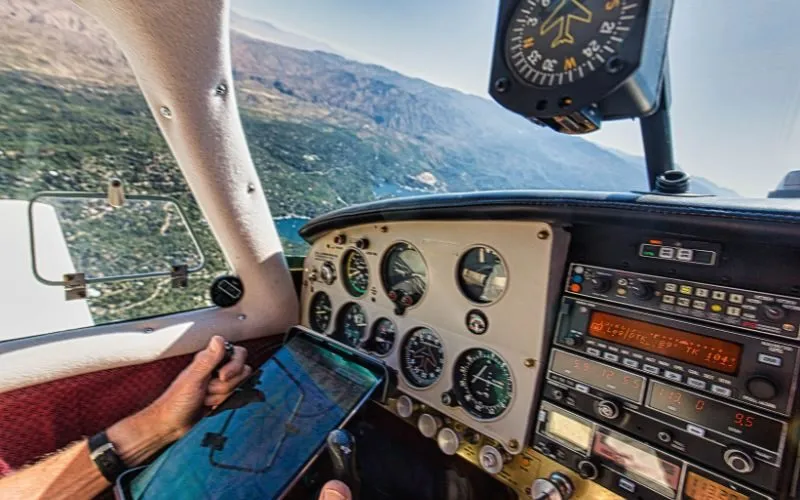
Early in flight training, you’ll want to set up some habits to help you prepare for each upcoming meeting with your instructor.
The syllabus outlines what you’ll be doing during each meeting with your instructor. Use it as a starting point as you study to become a pilot.
For example, what new maneuvers are coming up, and what old ones do you need to review a few more times?
We tend to show up ready to be passive listeners in a group class. However, during the one-on-one flight lessons, you’ll be expected to actively participate in everything. Your instructor will expect you to lead the discussion when you brief and debrief the flight. That means you need to have studied before you got there.
So to study effectively, you need to set specific goals. Be proactive and know what’s coming up next in training. Follow your instructor’s lead, and look ahead to what’s coming up in the next few lessons.
Plan the Time and Place
To meet those goals, give yourself time and space to get the work of studying done. Saying, “I need to learn the systems,” or “I need to go over that maneuver I performed poorly today,” is only the first step.
If you don’t dedicate a block of time to be in your schedule to do it, it won’t get done.
How much time should you dedicate? As a rule of thumb, most college programs organize their classes with the expectation that you will spend three times as many hours doing independent study as sitting in class. So if you attend three hours of class every week, you’d be studying nine more hours on your own.
Of course, many students can get by with less time if they know how to study effectively. But that math works well for flight training, too–especially if you’re in an accelerated flight training program.
This isn’t to say that it isn’t also a good idea to fill downtime with impromptu study sessions. Read the chapter again and quiz yourself on what you read before bed. Or grab your Oral Exam Preparation Guide and quiz yourself while you wait for your flight lesson to begin.
But this is a bonus round–not the real deal. The real studying gets done during your scheduled time slots.
Studying is Not Just Reading
So now you know about setting goals and making time to study, but how do you actually study to become a pilot? The number one thing to remember is that it is an active process in which you must be an engaged participant.
Movies will have you believe that studying is sitting alone in a library with a pile of books. While this might be a part, reading alone is an ineffective study method. It’s too easy to skim through boring bits, and it’s too easy to let your mind wander.

Actively studying means reading a passage and then summarizing it to yourself. For example, you might read a passage once and then say the important facts back or take hand-written notes.
After you’ve finished a section, you should quiz yourself to see if you remember what you supposedly learned.
The process of quizzing yourself is known as retrieval practice. It takes more brain power to read something, ask a question, then think back on what you read and answer it correctly than it does to simply read it. And the harder you make your brain work, the better it will stay in your memory.
Another great way to implement retrieval practice is to teach the material to someone else. Teaching requires a much higher level of learning–you must master the material well enough to communicate it all over again.
Cornell has a great write-up on how to study, including effective study strategies like retrieval practice.
Avoid Multitasking and Distractions
Multitasking hurts pilot study sessions because human brains are not wired to handle multiple tasks at once. Multiple studies show people multitask worse than they believe, and divided attention keeps a student from actively learning the material.
Multiple studies have proven that humans are much worse at multitasking than our egos will let us admit. Our brains are not wired to deal with multiple tasks at once.
In other words, you might think you can drive and text simultaneously, but that’s only because you aren’t paying attention to how badly you’re driving.
While studying, multitasking distracts you from the material. If a portion of your brain is paying attention to something else, so you can’t be actively participating in the learning process.
Don’t Overdo It
Student pilots study best when they respect their focus limits and take real breaks. The brain files information away during rest and sleep, so all-night cramming before a flight lesson leaves no time to organize what you learned.
When you’re studying to become a pilot it’s important to know your own focus limits. Take breaks and space out every once in a while. Your brain cannot work at full throttle all the time. It needs breaks, both during study sessions and in between them.
Make sure you acknowledge that it’s a break. Go for a walk, or call a friend.
Continuing to read and pretending to study while spacing out doesn’t help anyone.
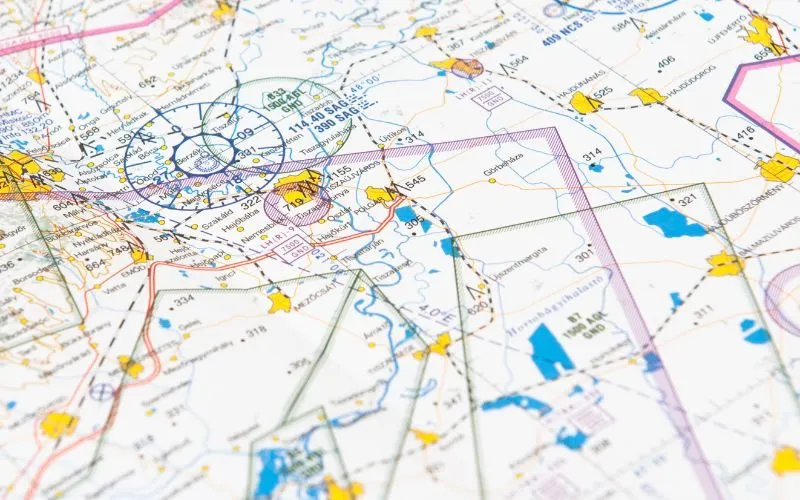
The brain needs a rest and recovery period to assimilate new information. Rest and sleep are the times when the brain files important things away. If you stay up all night cramming for your flight lesson, you won’t give your brain enough time to organize the information for later.
On the same note, don’t neglect living the healthiest lifestyle you can. Exercise, rest, and good nutrition contribute to how well you can focus when you sit down to study. As unrelated as they all seem, these are the keys to effective studying.
Don’t Be Afraid to Ask for Help
Student pilots should ask for help when stuck, starting with their flight instructor, who also serves as coach and mentor. Study groups work well too, and students in the Zero Time to Airline program regularly organize them.
You aren’t in this flight training thing alone. Your flight instructor is also your coach and mentor. So if you’re feeling lost and unsure how to begin studying, just ask for help.
Some schools may have tutors, or you can arrange for some extra ground instruction time to get you set on the right path.
It can also be beneficial to start a study group with other flight students. Group study time can be productive, especially at certain times like when getting ready for oral exams. In addition, group study sessions are great places to quiz one another and take turns teaching the material.
In the Zero Time to Airline program, students regularly form their own study groups to keep up in this full-time program. Study groups are an incredibly effective way to study to become a pilot because you can both get help from others and teach them the things you do know which helps deepen your own knowledge.
Wrapping Up – Study Smarter, Not Longer
Studying smarter means building study skills through practice, just like flying. Flight school covers much more than stick and rudder skills, and online ground school courses can support your study.
Like flying a plane, everyone gets better at studying the more they do. As you may start noticing, flight school is about much more than just learning the stick and rudder skills.
They say that practice makes perfect, and that is true–whether learning to grease a perfect landing or study for your next flight lesson.
If you’re looking for ground school recommendations, view our list of the best online ground school courses available.